

Why Is My Dog Licking His Paws?
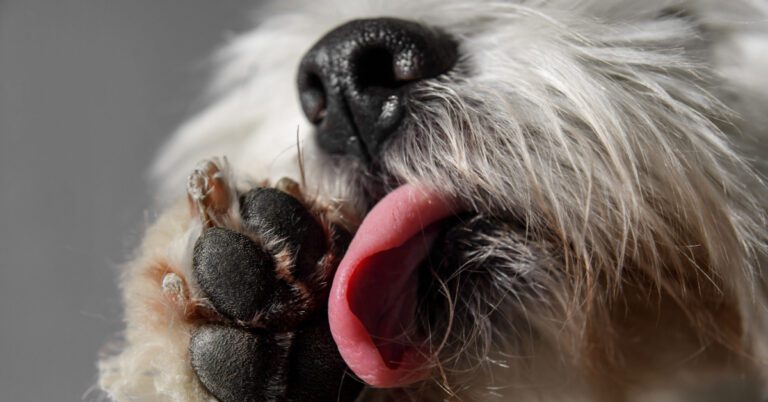
If your dog won’t stop licking or chewing at his feet, you’re likely wondering, why is my dog licking his paws so much? The short answer is that paw licking usually points to allergies, irritation, pain, boredom, or anxiety, and figuring out the exact cause is the key to stopping it. At Maple Grove Pet Hospital, we see dogs come in for excessive paw licking every week, and while an occasional lick after a walk is completely normal, licking that becomes constant or leads to raw, red skin is a signal that something more is going on. Below, we’ll walk through the most common reasons dogs lick their paws, when the behavior crosses into a medical concern, and what you can expect if you bring your dog in to see us.
Why Is My Dog Licking and Biting His Paws?
When a dog is licking and biting at his paws repeatedly, it’s almost always a response to discomfort of some kind, whether that’s itchiness, pain, or something lodged in the paw itself.
What the Behavior Usually Means
Dogs communicate discomfort with their mouths because they can’t tell you in words that something hurts or itches. A dog licking his paws obsessively is often trying to soothe inflamed skin, work out a splinter or foxtail, or relieve an itch caused by an allergic reaction. The location matters too. Licking focused on one paw usually points to a localized issue like an injury or foreign object, while licking on all four paws more often suggests a body-wide cause such as allergies.
Signs the Licking Has Become a Problem
Not every lick is cause for concern, but certain signs mean it’s time to pay closer attention:
- Skin between the toes looks red, moist, or has a rusty brown stain from constant saliva
- Your dog wakes up at night to lick, suggesting the itch or pain is disrupting sleep
- There’s a noticeable odor coming from the paw, which can indicate a yeast or bacterial infection
- Your dog limps or favors the paw between licking sessions
If you notice any of these patterns, it’s worth scheduling an exam so your veterinarian can look closely at the paw and surrounding skin. Pet owners who ask, “Why is my dog licking his paws so often?” are usually surprised to learn just how many different conditions can share this one symptom.
Common Causes Behind Dogs Licking Their Paws
There are several overlapping reasons why your dog licking his paws might come up as a concern, and most dogs fall into one of a few common categories.
Environmental and Food Allergies
Allergies are one of the most frequent reasons dogs lick their paws. Seasonal allergens like grass, pollen, and mold can settle on a dog’s feet during walks, triggering itching almost immediately. Food allergies work differently, causing inflammation throughout the body that often shows up as itchy paws, ears, or belly. Because paws have less fur than other parts of the body, they tend to absorb allergens more directly and become an easy target for licking.
Parasites and Skin Infections
Fleas, mites, and mange can all cause intense itching that a dog tries to relieve by licking his paws. Yeast and bacterial infections often develop secondary to allergies, since constantly damp, licked skin creates the perfect environment for overgrowth. These infections usually bring a distinct odor and a pink or rust-colored tint to the fur, and they tend to make the licking worse rather than better over time.
Injuries and Irritants
Sometimes the explanation behind a dog licking his paws is more straightforward and mechanical rather than medical. Paws take a beating on walks, in the yard, and on hot pavement, so it’s worth checking between the toes and around the nails for anything unusual. Common culprits include:
- A thorn, grass awn, or small pebble stuck between the toes
- A torn or cracked nail causing localized pain
- Chemical irritation from lawn treatments, road salt, or de-icing products
- A minor cut, blister, or abrasion picked up on a walk or run
- Dry, cracked paw pads from hot pavement or cold winter sidewalks
A quick visual check at home can rule some of these out, but anything embedded deeply in the skin should be handled by a veterinarian rather than removed at home.
Behavioral and Anxiety-Related Licking
Not all paw licking stems from a physical cause. Dogs who are bored, stressed, or anxious sometimes develop repetitive licking as a self-soothing habit, similar to nail biting in people. This type of licking can become a hard-to-break cycle, since the repetitive motion itself releases calming endorphins, which reinforces the behavior over time. Dogs left alone for long stretches, recently rehomed, or going through a change in routine, such as a move or a new pet in the household, are especially prone to this pattern. Because behavioral licking looks nearly identical to allergy-driven licking from the outside, ruling out medical causes first is usually the fastest way to get an accurate answer.
When Paw Licking Signals a Bigger Problem
While many cases of paw licking resolve with simple changes, some situations call for veterinary attention sooner rather than later.
Watch for These Warning Signs
Dogs that lick one paw excessively while otherwise seeming fine may still have something serious brewing beneath the surface. Your veterinarian can examine the paw for swelling, heat, or a foreign object that isn’t visible from a quick glance at home. Additional warning signs include:
- Sudden, intense licking focused on a single paw
- Swelling, warmth, or a foul smell around the nail beds
- Open sores, scabbing, or hair loss on the paw
- Licking paired with lethargy, appetite changes, or a fever
How Long Is Too Long to Wait
A dog licking his paws occasionally after being outside typically isn’t an emergency. However, licking that persists for more than a few days, worsens, or is accompanied by limping deserves a same-week appointment. Left untreated, secondary infections can develop quickly in already irritated skin, turning a manageable issue into a longer, more involved recovery. The question “Why is my dog licking his paws so much?” tends to come up most often during allergy season in Minnesota, when pollen counts spike and paws pick up allergens on every walk.
The Role of Diagnostic Testing
Because so many conditions can cause a dog to lick his paws, veterinarians often rely on diagnostic tools rather than guesswork. Skin scrapings, cytology, or allergy testing can help pinpoint whether the root cause is parasitic, infectious, or allergy-driven, which then shapes the entire treatment plan and helps prevent the same licking pattern from returning a few weeks later.
How Maple Grove Pet Hospital Helps Dogs Find Paw Relief
Getting to the bottom of why a dog is licking his paws takes an experienced eye and the right diagnostic approach, which is exactly what our team at Maple Grove Pet Hospital provides for local pet owners.
What to Expect During a Visit
When you bring your dog to Maple Grove Pet Hospital for paw licking, our veterinary team starts with a full physical exam and a detailed history of when the licking started and how it has changed. This conversation often reveals patterns, like a seasonal flare-up or a new food, that point directly to the cause.
Personalized Treatment Plans
Every dog’s paw licking has a different root cause, so treatment plans are tailored accordingly:
- Allergy management through diet trials, medication, or environmental changes
- Topical or oral treatment for yeast and bacterial infections
- Nail and paw pad care for injuries or irritation
- Behavioral guidance when anxiety or boredom is the driving factor
If your dog has been licking his paws more than usual, schedule an appointment online or call us at 763-265-5878. Our team at Maple Grove Pet Hospital is ready to help you get answers. A prompt visit can catch minor irritations before they turn into bigger, more uncomfortable problems, and gives your dog a faster path back to comfort.
Recent Posts
About Us
Maple Grove Pet Hospital provides veterinary care for dogs and cats in Maple Grove, MN. Schedule an appointment by calling or booking online today.